How I Passed All 13 ATPL Exams in 14 Months — Without Opening a Single Textbook
ATPL (Airline Transport Pilot Licence) theory exams are 13 subjects every aspiring airline pilot must pass. Most people take 2+ years. A lot of students grind through thousands of questions, buy stacks of books, and still barely pass.
I just passed all 13. My last sitting was 7 exams over 3 days. Every single one above 90%. General Navigation was a perfect 100%.
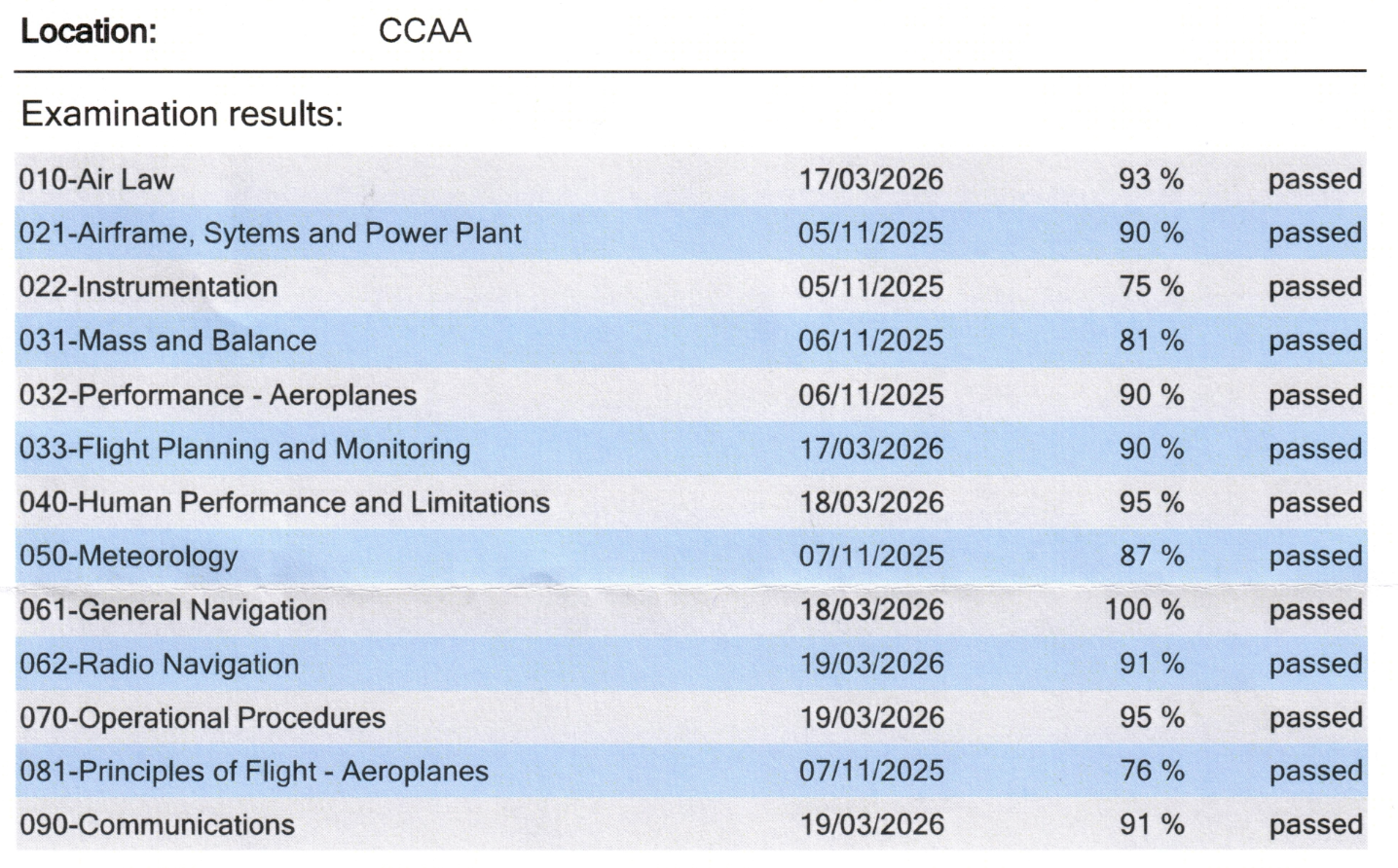
I'm 42. I had a full-time job. I didn't read a single textbook. And I've never been good at remembering random numbers, dates, and names — I've always struggled with that. I started studying in mid January 2025 and finished in mid March 2026 — 14 months total. Two sittings at the Croatian CAA: 6 exams in November 2025, 7 more in March 2026. Was it like drinking from a fire hose? Yes, at the beginning. Then I found a good way to manage it.
This article breaks down my entire study method — exactly what I did, how long each phase took, and the tool that changed everything. Whether you're just starting your ATPL journey or stuck in the middle of it, this is for you.
My study had 3 stages and one key app. Each builds on the last. Skip one and the whole thing falls apart.
Stage 1: Watch Videos. Don't Take Notes.
No textbooks (also a huge cost saving). YouTube videos only — there's plenty of free content from flight schools and instructors. These famous blue-background lectures are a good example of what I watched. I tried taking notes like I did for my PPL, but with 13 subjects it wasn't sustainable. So I just watched and absorbed.
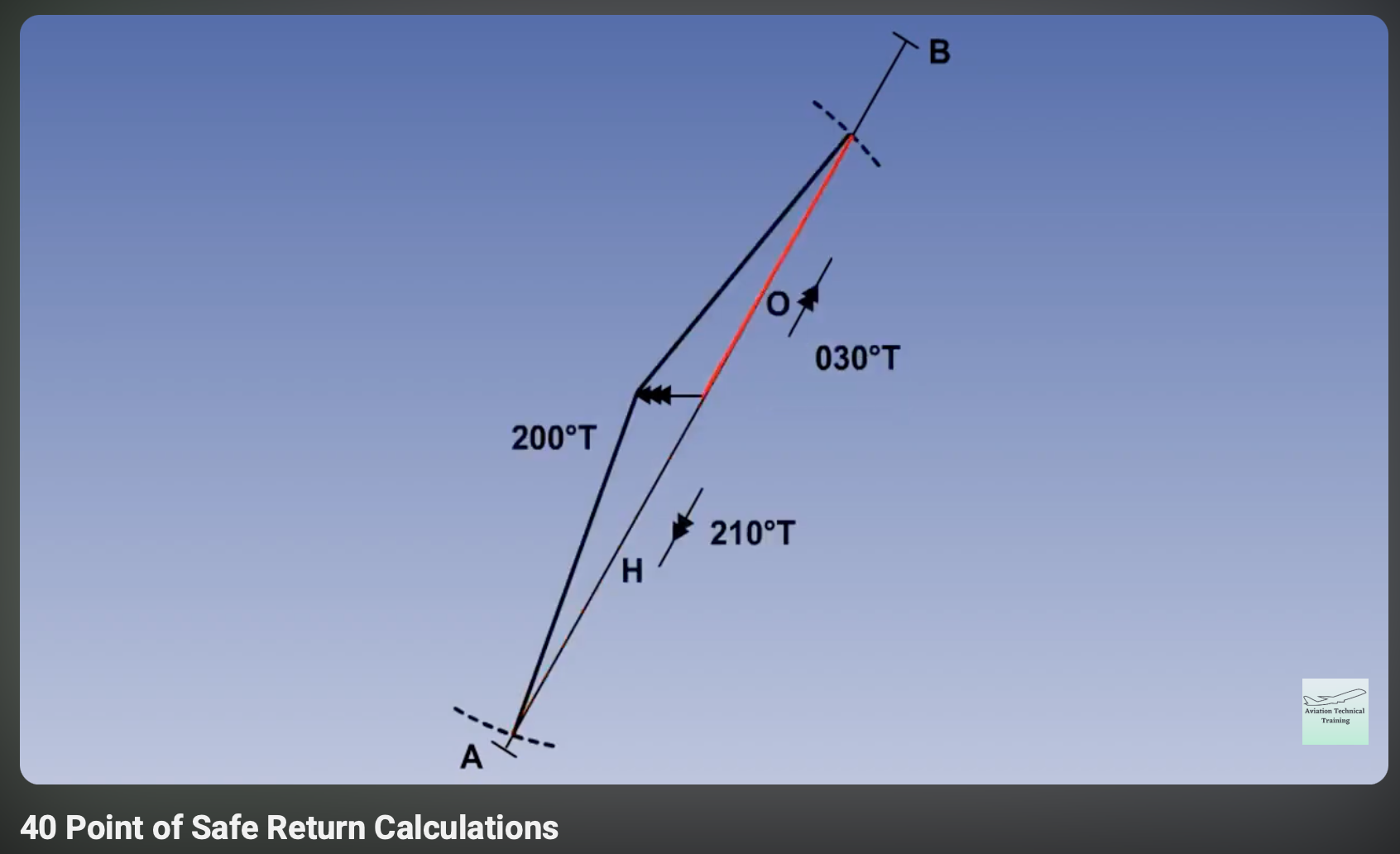
Boring? Absolutely. I fell asleep to meteorology lectures more times than I can count. But it was only a few weeks, and something was sticking — every hour made the next stage easier.
Stage 2: Explore Your Knowledge Gaps
After the videos, you know more than you think — from PPL, from real flying, from natural understanding. Stage 2 is about finding what's missing. What's missing enough to fail ATPL exams. This is key. The amount of information in books and videos is enormous — you can't reasonably absorb all of it. So I decided I need to know what I have to know.
I checked question banks. I used atplquestions.com but didn't grind every question several times like many do. I filtered for real exam questions in my region (Austria, Croatia, Slovenia), then sampled every 6th or 7th question. Like tasting food while cooking — a spoonful here and there to find where it needs salt. This way I built an overall understanding of what's required based on real exam questions. Once I discovered a gap in my knowledge, I did the following.
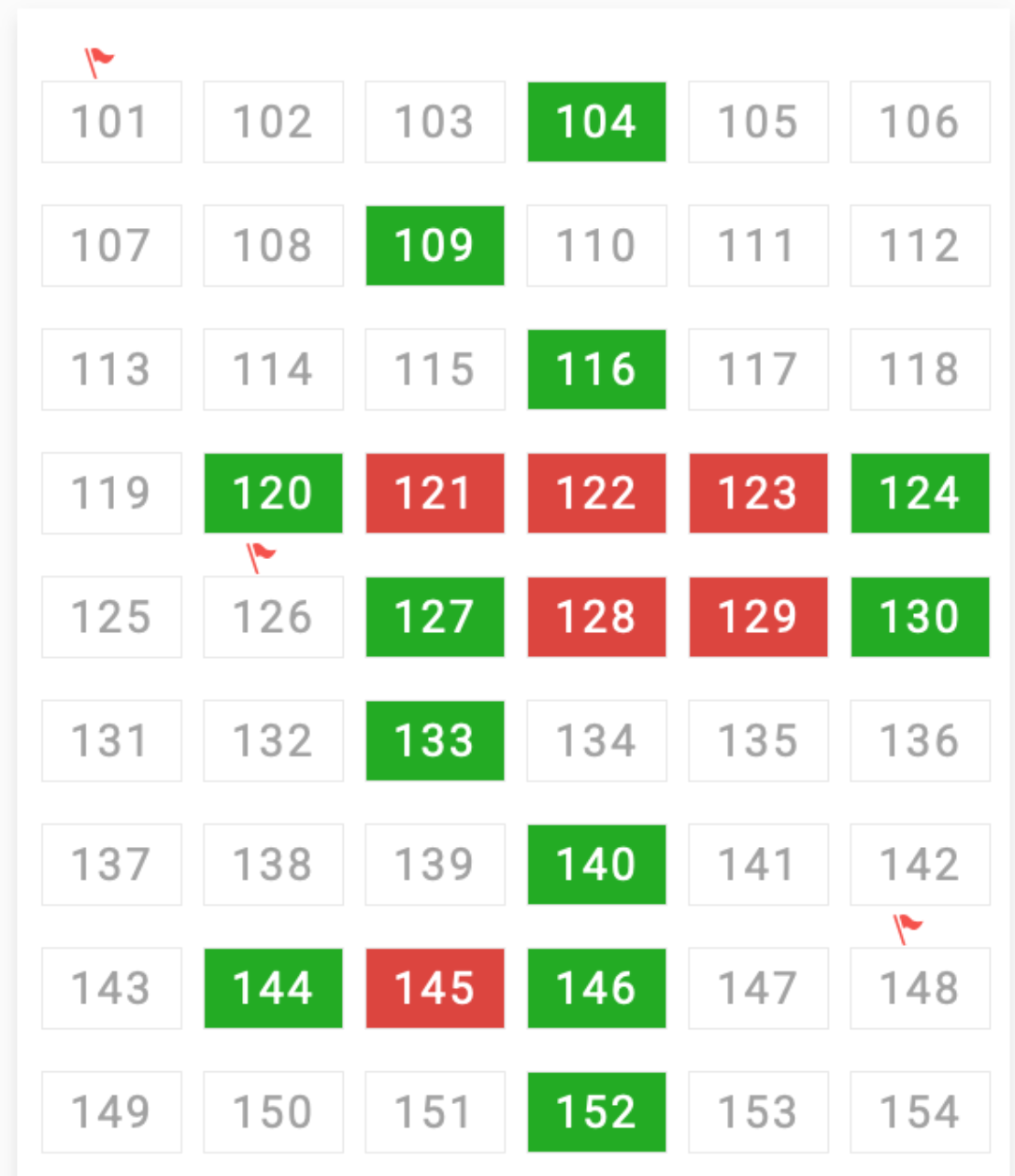
Understanding gaps — rewatch particular videos, read explanations and comments on atplquestions (the comments are surprisingly useful — mnemonics, tricks, shortcuts). Very helpful. How the 3-cell weather system works, the relationship between different speeds, how a turbine engine works — all of these need to be known by heart, and good understanding helps a lot for passing exams and in the future.
Memorization gaps — this is just pure recall stuff. When do monsoon thunderstorms happen in India? Contingency fuel — 3% or 5%? ILS lateral limits? These you just need to memorize and move on. For everything worth memorizing, I turned it into a flashcard question and answer. Not regular notes — flashcards. I spent months creating them — but you can skip that. More on that in Stage 3.
Calculation-heavy subjects — same sampling approach. Understanding the concept matters more than grinding. Key formulas, flight computer skills, and knowing why the math works. For calculation-heavy subjects like General Navigation, Flight Planning, and Mass & Balance, going through the whole question bank makes even less sense since many questions are just variations of the same rule or formula.
Stage 3: Flashcards Every Day, Mock Exams Every Day
This is where it all comes together — the daily combo that actually gets you exam-ready, and the period that took the most time. This is a data-driven approach where numbers can really tell if you're ready or not.
The Flashcards
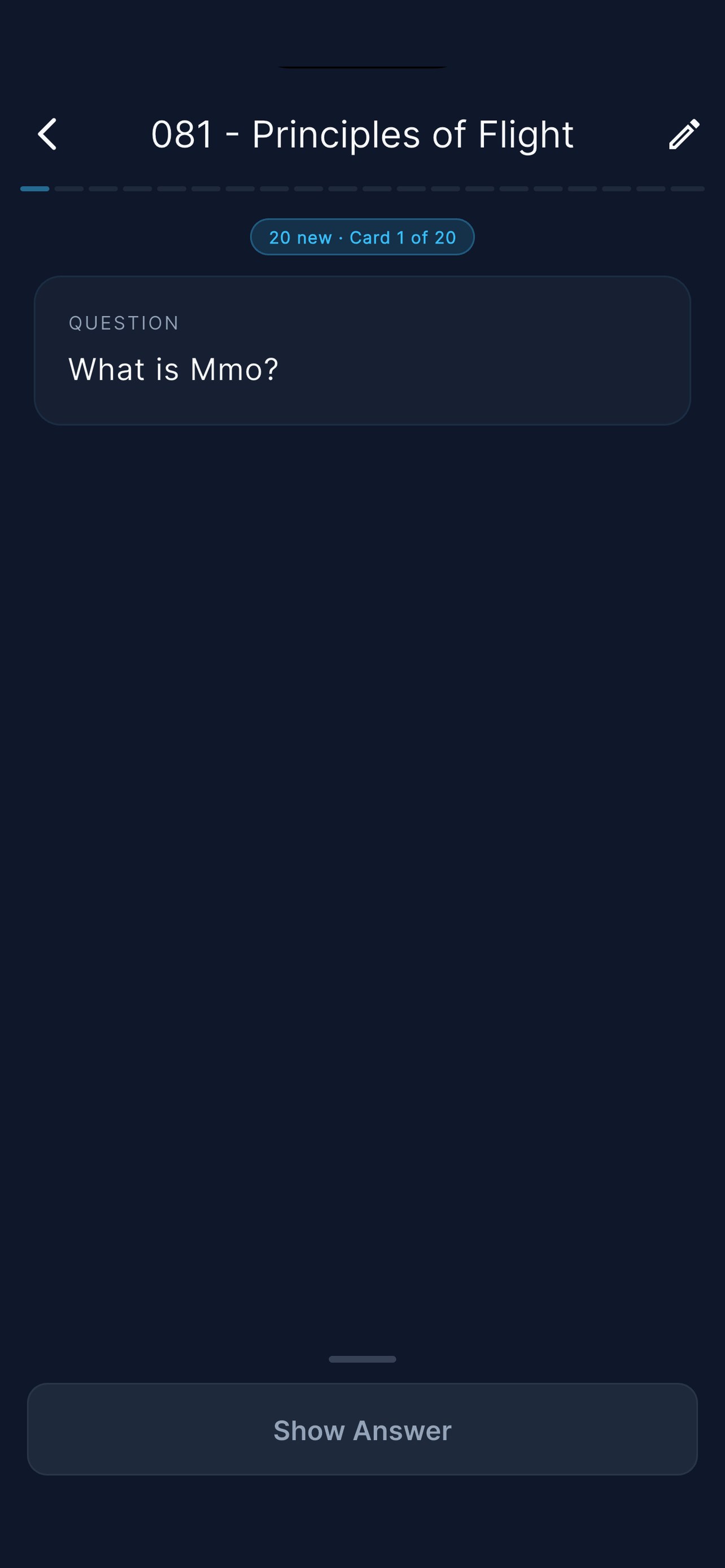
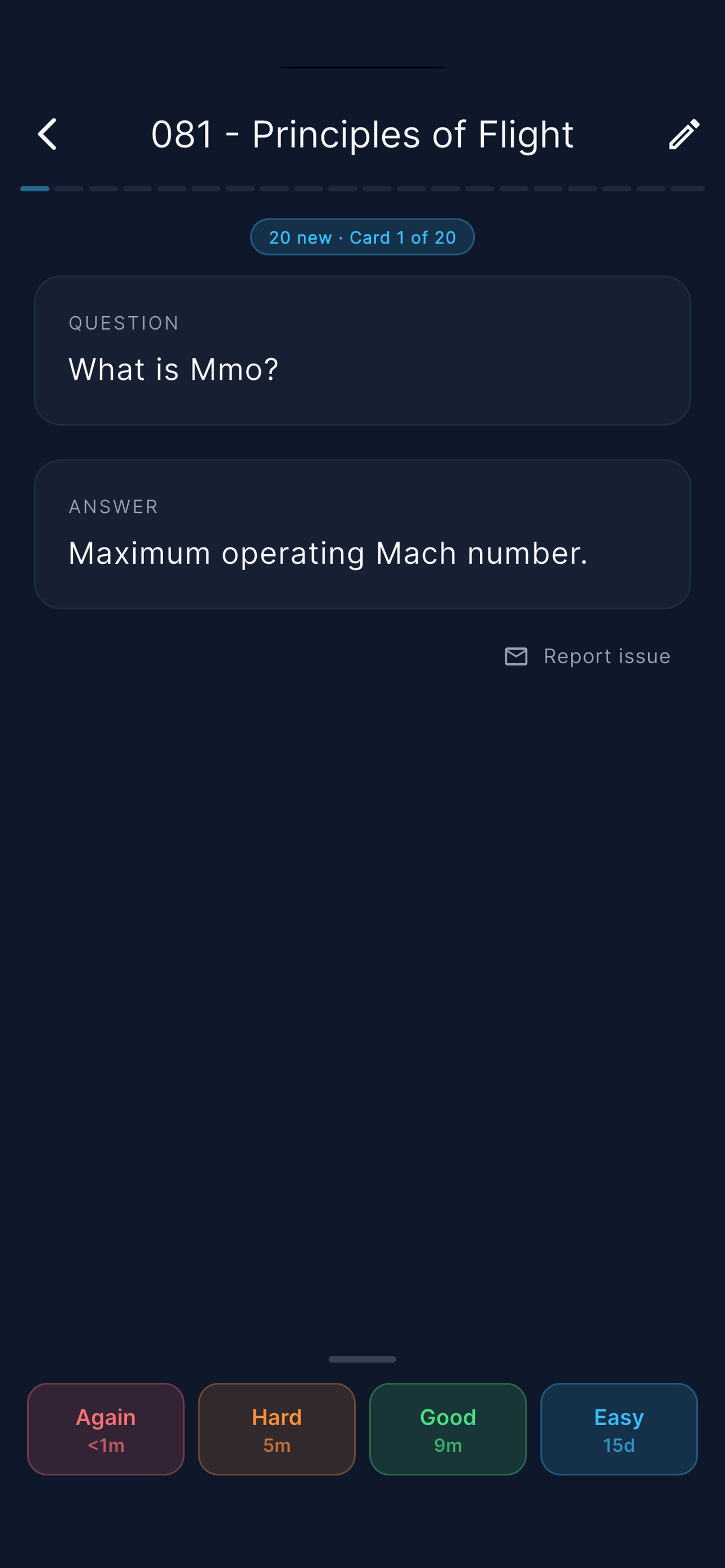
Spaced repetition is a study method backed by science. You review flashcards (question and answer), rate each one easy or hard, and the app adjusts when you see it again. Stuff you know gets pushed further out. Stuff you struggle with comes back soon. Pushes everything into long-term memory. 10 minutes a day minimum. Consistency is everything. This is how approach minimums, airspace classes, and types of ice detectors end up deep in long-term memory.
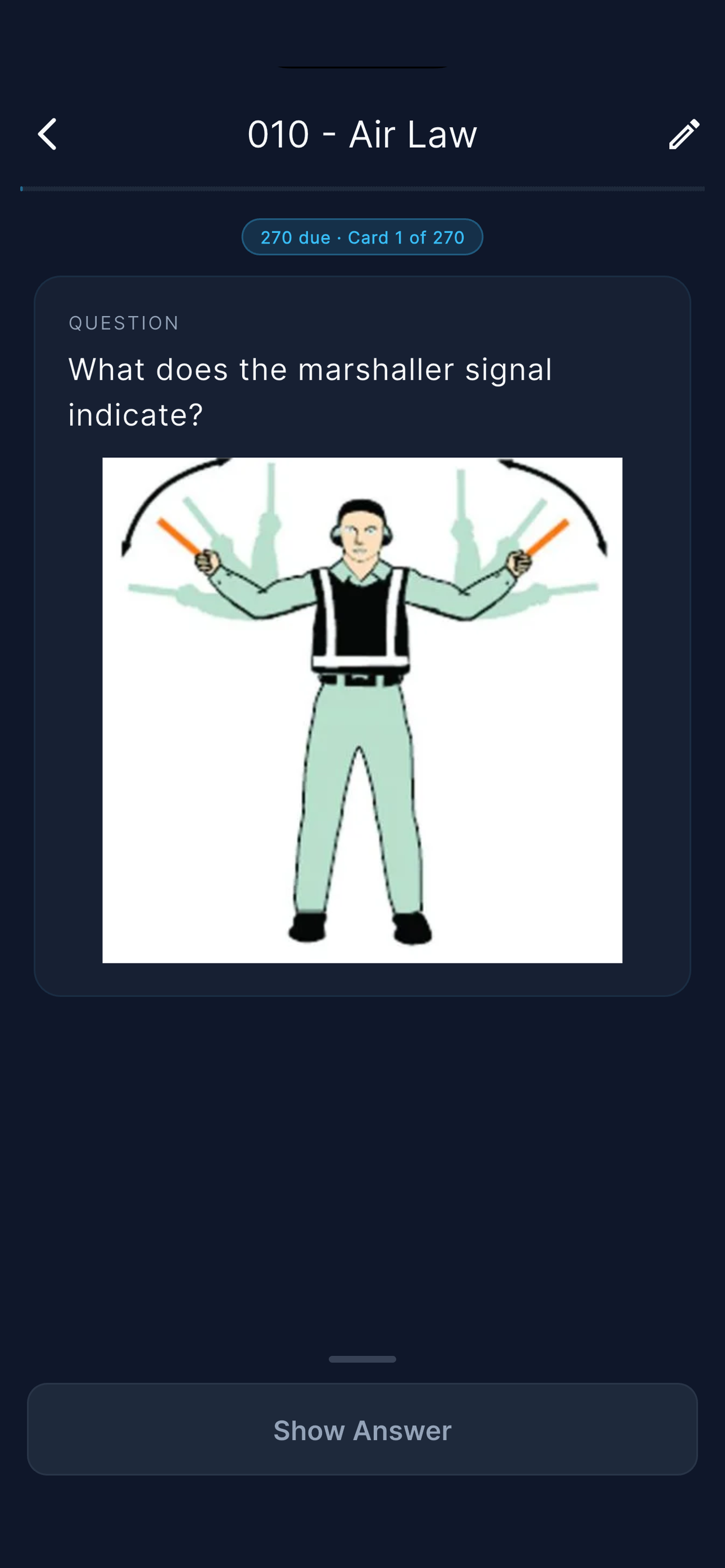
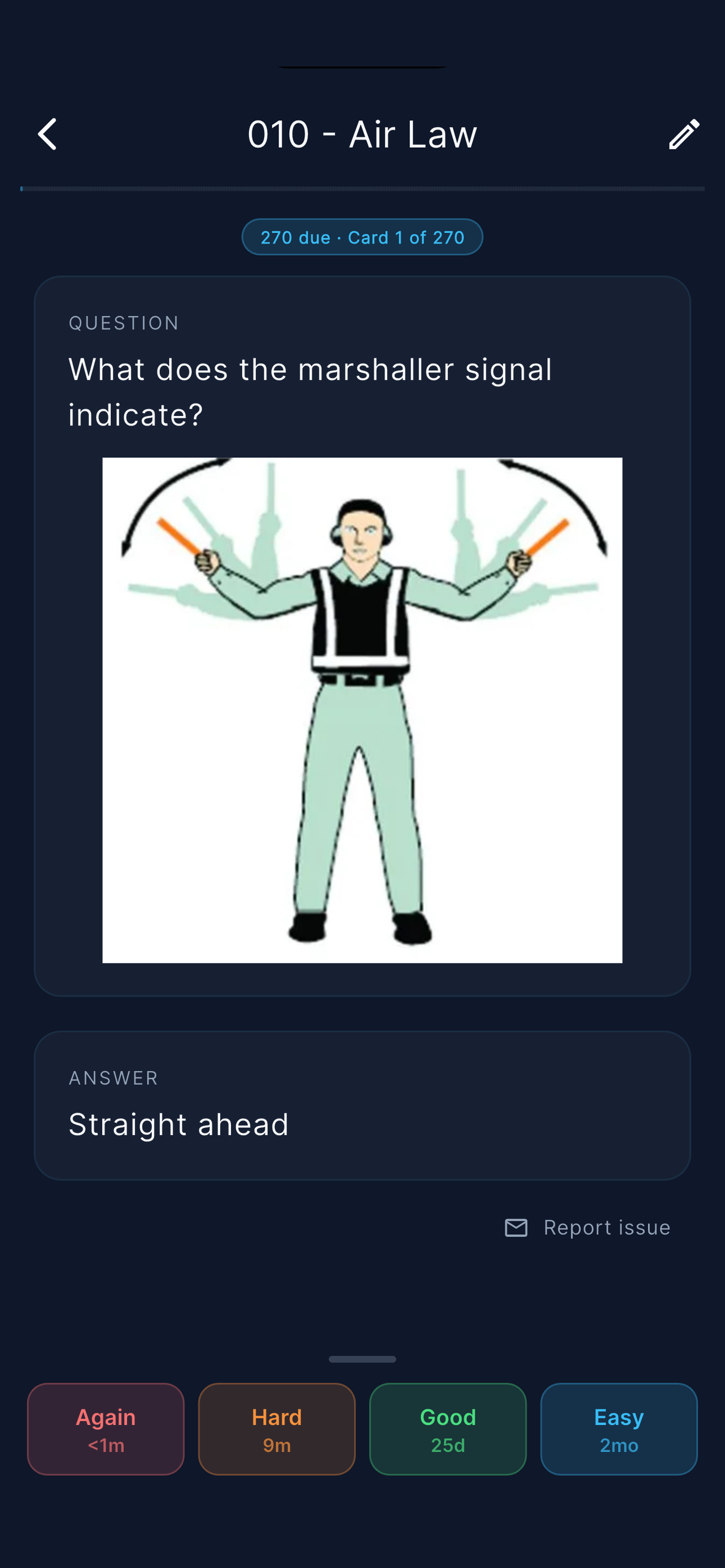
I started with Anki. It was painful — files, Dropbox sync, and I couldn't even add images for marshal signals. I'm a software engineer my whole professional life — and I was struggling with it.
So I built my own app the way I liked it, simple and reliable — ATPL Cards. Every card I created manually, based on what I identified as essential to memorise. Not AI-generated, not copied from somewhere. The exact cards I used to pass all 13 exams across 14 months. Spaced repetition built in, works offline, syncs across devices. You can add your own cards too — but the core deck that got me through every exam is already there. Remember when I said you might not need to create your own flashcards? This is what I meant.
Every free moment — in a queue, waiting around, morning coffee — I pulled up cards and clicked through them. Bit by bit, all that memorisation stuff gets into long-term memory.
The Mock Exams
Several mock exams per day on atplquestions, filtered for real questions reported in my region. And after every single one, I reviewed every wrong answer. Didn't understand the topic? Go study it. Worth memorizing? New flashcard. Every failed question made the next mock better — a constant feedback loop.
I tracked everything in a spreadsheet: subject, score, date, filter, and why I got each question wrong — rush, knowledge, or ambiguity. That distinction matters. Rushing is a discipline problem, not a study problem. Different fix. Some ambiguous questions are just worth memorising — so I created a flashcard.


Progression:
- Start with filtered questions (your region, reported on real exams). Aim for 85%+.
- Several weeks before exams, expand to no filters by region and filter only unseen questions. The stress test: can you hit 85% on material you've never seen?
- Final week: review last 100 questions reported from your exam location. If you score 90%+ — you're ready.
My last week: consistently in the 90s, some at 100%.
Time Investment
Video phase: 5–6 hours/day, but only a few weeks. After that: 2–4 hours/day. Some weeks off. Halfway through I quit my job — not for more study time. Same routine. Just more time to live.
One more thing: I studied subjects in parallel. Start one, move it to the question bank phase, begin the next. At any point I had 2–3 subjects at different stages. Keeps things moving — you never get stuck on one topic for months.
14 months. 13 exams. Not burned out. The method is sustainable.
Summary
- Watch videos, don't take notes. Absorb the big picture. Study subjects in parallel.
- Explore knowledge gaps. Sample the question bank, fill understanding gaps with videos and comments, memorization gaps with flashcards.
- Flashcards + mock exams daily. Track scores and failure reasons. Progress from filtered to unfiltered to last 100 reported questions.
It's doable. 14 months, no textbooks, most of the exams above 90%. You've got this.
Try ATPL Cards
I built ATPL Cards because nothing else worked for me — and it ended up being the most important tool in my 14-month journey. Every flashcard I created by hand, proven across all 13 exams, with spaced repetition designed specifically for ATPL. I'm still adding new cards as I progress through flight training — instrument, multi-engine, type rating. The app keeps growing.
100% satisfaction guaranteed. If the app doesn't work for you, request a refund — no questions asked.
If ATPL training has already stretched your budget, tap the support button inside the app and we'll see how we can help.